


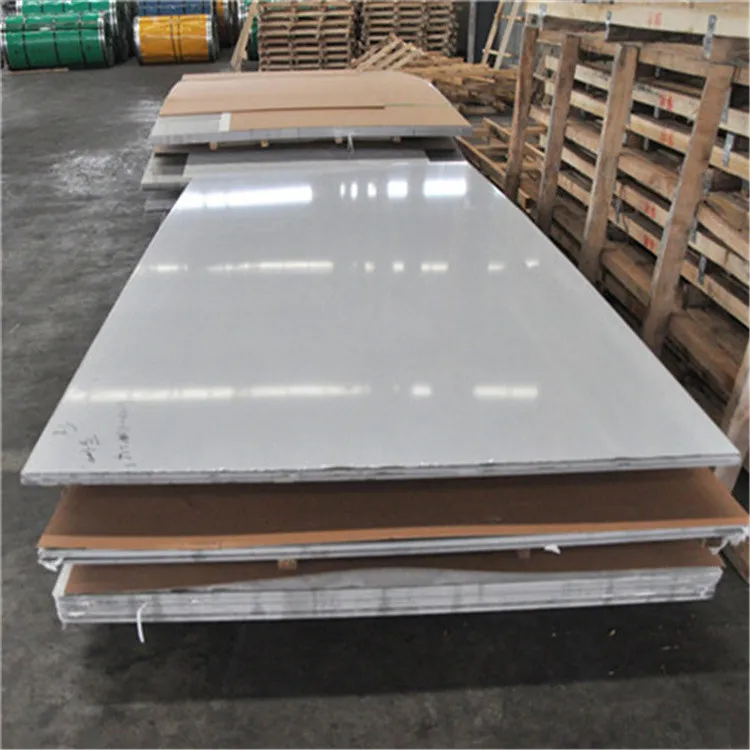
Indonesian Oven Manufacturer Orders Rectangular 304 Stainless Steel Sheeting for High Heat Resistance
Published On: November 13, 2026
An industrial oven and commercial cooking equipment manufacturer in Indonesia has placed a repeat order for rectangular 304 stainless steel sheeting supplied cut to size, selected for its high heat resistance and long service life in continuously hot, humid operating conditions. The sheets are used as oven cavity liners, burner surrounds, heat shields and exhaust hood panels, where the material must hold shape above 700°C while resisting oxidation, thermal cycling and daily wash-down.
The buyer builds deck ovens, convection ovens, rotary rack ovens and heavy-duty cooking ranges for bakeries, hotels and food factories across Java and Sumatra. Its production line shears, folds and TIG welds sheet into cavity panels and door skins, then assembles burners, insulation and controls. Because the units are installed in coastal cities such as Jakarta and Surabaya, with humidity above 80% and airborne chloride, the grade had to address heat and corrosion together.
- Heat distortion. Earlier 430-grade liners warped and rippled after months of thermal cycling, opening gaps around door seals and hurting oven efficiency.
- Surface oxidation and discolouration. Panels developed heavy oxide scale and heat tint, which customers read as poor quality on a premium-priced oven.
- Rust staining in coastal service. Ferritic grades showed tea-staining in seaside installations, generating warranty claims.
- Inconsistent blank dimensions. Sheets cut by local job shops varied in length and squareness, forcing welders to fill gaps and increasing grinding time.
- Handling damage. Unprotected sheets arrived scratched, and touch-up polishing consumed hours on every batch.
We supplied 304 (UNS S30400 / 1.4301) rectangular sheeting sheared to the customer's blank sizes rather than in standard mill sheets, so that every panel enters the press brake as a finished rectangle. The austenitic 18/8 chemistry is the key to the heat performance: chromium in the 18–20% range forms a dense, self-repairing oxide layer that resists scaling to roughly 870°C in continuous service and 925°C intermittently, while the nickel content stabilises the austenitic structure so the sheet does not become brittle after repeated heating and cooling. Low carbon content limits carbide precipitation in the weld zone, keeping corner seams from sensitising in humid service.
Rectangles are produced on a CNC shear with length tolerance of plus or minus 0.5mm and squareness within 0.5mm per metre, then deburred on all four edges so the folding team gets a clean, safe blank with no burr to interfere with the bend line. Thickness is held at 1.5mm, 2.0mm and 3.0mm with tolerance of plus or minus 0.05mm on the two lighter gauges, keeping springback predictable when the same tooling is used across a batch. One face carries a removable PVC film; blanks are interleaved with paper and edge-protected in seaworthy crates, arriving ready for welding without re-polishing.
| Service Condition | Behaviour of 304 Sheeting |
|---|---|
| Up to 500°C continuous | Stable strength, bright oxide-free surface, no measurable scaling |
| 500 – 700°C continuous | Light straw to brown tint, oxide layer intact, no metal loss |
| 870°C continuous | Rated oxidation limit, scale forms but remains adherent and protective |
| 925°C intermittent | Acceptable for cyclic burner duty with no spalling |
| Thermal cycling, ambient to 700°C | Low thermal expansion resists warping and door-seal gap growth |
| Humid or coastal storage | No tea-staining or rust bleed on cut edges |
| Parameter | Specification |
|---|---|
| Grade | 304 (UNS S30400 / 1.4301) |
| Form | Rectangular sheeting, cut to size |
| Thickness | 1.5mm / 2.0mm / 3.0mm |
| Rectangle sizes | 1000x2000mm, 1219x2438mm, custom blanks |
| Length tolerance | ±0.5mm |
| Squareness | ≤0.5mm per metre |
| Surface | 2B finish, PVC film on one face |
| Chemical composition | Cr 18–20%, Ni 8–10.5%, C ≤0.08% |
| Tensile strength | ≥515 MPa |
| Yield strength | ≥205 MPa |
| Elongation | ≥40% |
| Max service temperature | 870°C continuous / 925°C intermittent |
| Standard | ASTM A240, EN 10088-2 |
- Oven cavities hold their geometry through continuous burner duty, so door-seal gaps stay within specification.
- Oxidation resistance eliminated the heavy scaling that previously made liners look worn after a few months.
- 304 chemistry removed coastal tea-staining and the warranty claims that came with it.
- Pre-cut rectangles with tight squareness cut welder fitting time and grinding labour on every unit.
- Consistent gauge keeps press-brake springback predictable, reducing re-bending and scrap.
- Film-and-crate packing ended transit scratches, removing the re-polishing step from the assembly line.
High heat resistance is not only a question of alloy selection; it depends on stable chemistry, controlled gauge and blanks that fit together without gaps. By specifying rectangular 304 sheeting cut to size and supplied with traceable mill certification, the Indonesian manufacturer solved warping, scaling and coastal staining in a single material change — and turned a recurring warranty issue into a selling point for its oven range.

